
Our curriculum
At Staverton, our vision is a curriculum without walls, ceilings or boundaries. Rooted in our ethos as a life-giving tree, we want every child to grow strong in knowledge, skills and purpose – becoming confident, independent and reflective learners, whatever their starting point.
We're committed to a curriculum that is inclusive, broad and balanced – supporting children's spiritual, moral, social and cultural development, while actively promoting Fundamental British Values to prepare them for life in modern Britain.
OFSTED outstanding for Early Years
We're rated Outstanding for early years excellence. From age 2 through Reception, we're here to help your child flourish.
Find Out MoreOur core principles for learning

Building knowledge
Knowledge is the foundation of learning. Lessons are designed to deepen understanding, build connections with prior learning, and enable creativity, critical thinking and new ideas.

Developing language
Language and vocabulary are central to our curriculum. Children are immersed in a language-rich environment, supported by high-quality literature that provides opportunities for exploration, comprehension and expression.

Discovering purpose
We want children to discover meaning in their learning and to live by our school values. By engaging with a variety of disciplines, pupils begin to develop their own sense of purpose and vision for the future.

Exploring narrative
As a story-centred school, we value narrative as a way of making sense of the world. Reading and storytelling are woven into daily life at Staverton, supported by investment in high-quality books and regular opportunities to share stories.
How we teach
- High expectations for knowledge and vocabulary in every lesson
- Quality outcomes through practice, repetition and pride in presentation
- Modelling by staff to demonstrate processes, skills and techniques
- Accessible learning, tailored to individual needs, ensuring every child succeeds
- Regular feedback, so children understand what they're doing well and exactly what to work on next
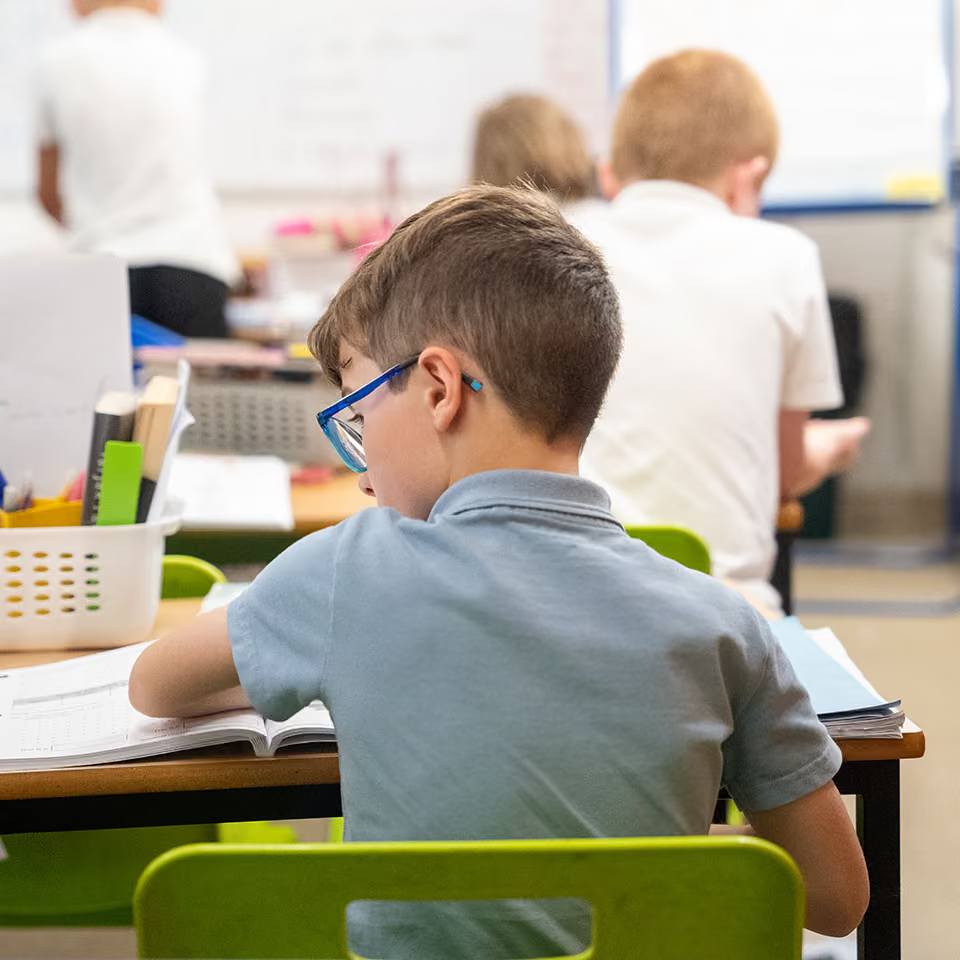
Curriculum across the school

Early Years Foundation Stage
In Reception, learning is play-based and child-led, following the Foundation Stage curriculum across seven areas: Communication and Language, Physical Development, Personal, Social and Emotional Development, Literacy, Mathematics, Understanding the World, and Expressive Arts and Design. Hands-on learning, indoors and outdoors, is valued highly. Reading and language development are priorities, and staff use ongoing assessment – with contributions from parents – to shape learning opportunities around each child.

Moving into Key Stage 1
As children move into Year 1, we carry forward the elements of play-based learning that serve them well, rather than expecting an abrupt shift to formal, desk-based lessons overnight. Learning continues to build on the strong foundations laid in EYFS, gradually introducing more structured teaching as children are ready for it.

Key Stage 2
As children progress through Key Stage 2, the curriculum broadens further, with subjects taught in greater depth and children given increasing independence in how they apply their knowledge and skills. This builds toward the confident, secure foundation every child needs as they prepare for the transition to secondary school.
Measuring impact
We know our curriculum is effective when children:
- Show secure knowledge, skills and language
- Are ready for secondary school and beyond
- Produce high-quality work and demonstrate pride in their learning
We evaluate impact through statutory assessments, teacher assessment and pupil book studies, learning walks and discussions, internal and external moderation, and monitoring by governors and external partners.
Find out more
Class pages on this website provide a termly summary of learning. For further details about our curriculum, please get in touch and we will direct you to the appropriate subject lead.