

Remote education
Our approach to remote education is designed to help children maintain their learning and connection with school, while recognising that remote learning is not a replacement for being in school. The provision we offer will depend on the reason for the absence, the age and needs of the child, and the expected length of time they will be away from school.
When might remote education be used?
Remote education may be provided in circumstances such as:
- A short-notice school closure of more than 24 hours, for example due to extreme weather or an unexpected site issue
- A child who is temporarily unable to attend school but is well enough to learn at home
- Other exceptional circumstances where the school agrees that remote education is appropriate
Where a child is unwell, their priority should be rest and recovery rather than completing schoolwork.
How will learning be provided?
The school will communicate with families about the arrangements for remote learning and provide appropriate learning activities for pupils.
Depending on the circumstances, learning may include:
- Activities and resources provided through email
- Recorded or live teaching where appropriate
- Reading and independent learning activities
- Practical and creative activities
- Mathematics, English and other curriculum activities
- Work provided electronically or, where necessary, in printed form
The exact approach will vary according to the age of the child. Younger children, particularly those in EYFS, will generally be provided with shorter, more practical and play-based activities, while pupils in Key Stage 1 and Key Stage 2 will increasingly be expected to complete independent learning.
What will a typical day look like?
Early Years Foundation Stage
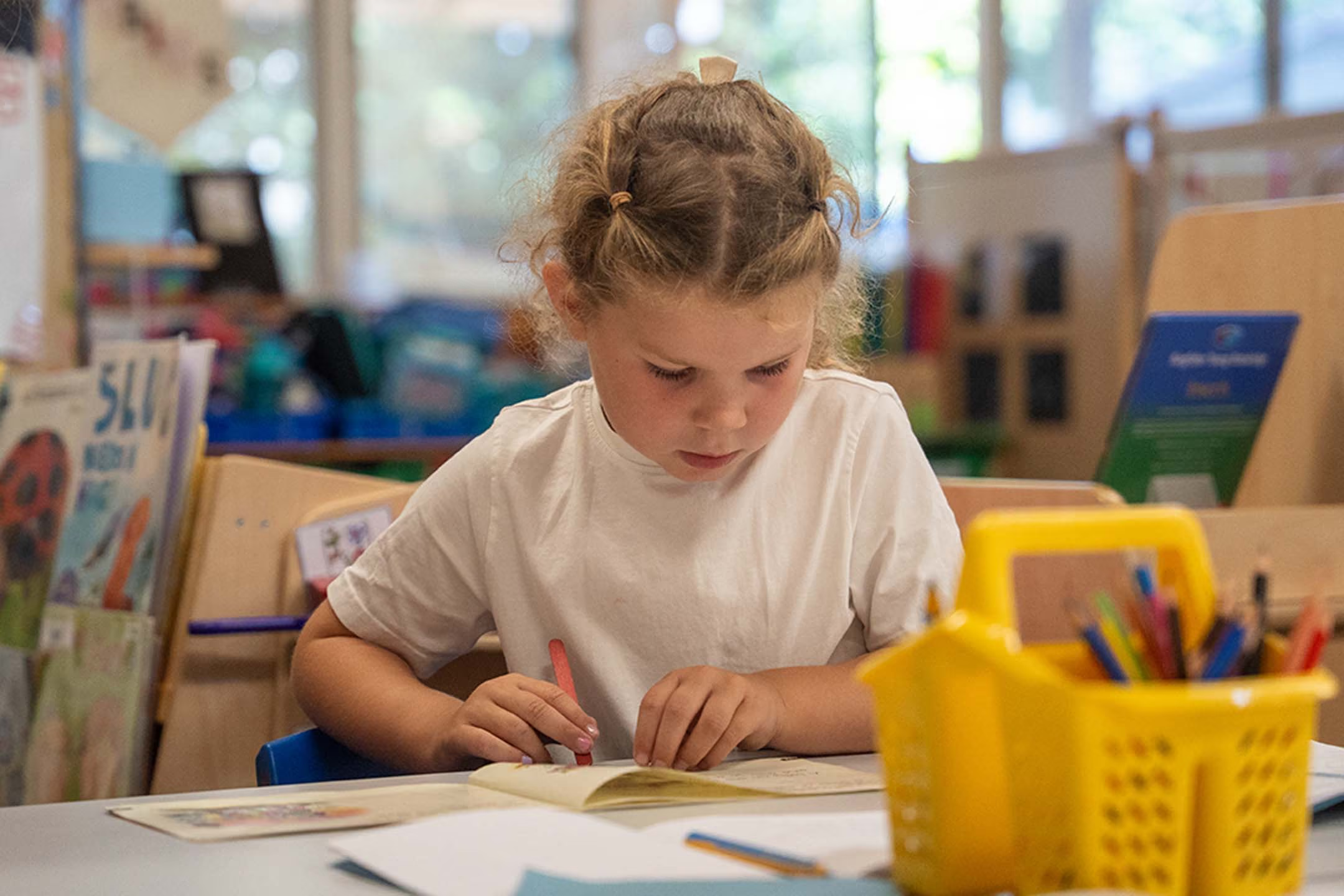
Remote learning for our youngest children will focus on practical, play-based activities that support the areas of learning in the Early Years curriculum.
Activities may include:
- Sharing and talking about books
- Phonics and early reading activities
- Counting and early mathematical activities
- Creative activities
- Physical activities
- Opportunities to develop communication and language
- Practical activities that children can complete with everyday household resources
Parents and carers will not be expected to recreate the classroom at home. The emphasis will be on short, purposeful activities alongside play and family time.
Key Stage 1
Pupils in Key Stage 1 will receive activities appropriate to their age and stage of development. These will typically include:
- Reading
- Phonics or spelling
- Mathematics
- Writing
- Curriculum activities linked to their current learning
Children will also be encouraged to take regular breaks and undertake physical, practical and creative activities.
Key Stage 2
Pupils in Key Stage 2 will be expected to complete a greater proportion of independent learning. This may include:
- Reading
- Mathematics
- English
- Spelling, grammar and vocabulary
- Science and other foundation subjects
- Activities linked to the curriculum being taught in school
The amount and type of work provided will take account of the length of the absence and the circumstances in which remote education is being used.
How will we support pupils with SEND?
We recognise that remote learning may present additional challenges for some pupils with special educational needs and/or disabilities.
Where appropriate, remote learning will be adapted to reflect a child's individual needs and existing support arrangements. This may include:
- Shorter or more manageable activities
- Visual resources and clear instructions
- Practical and sensory activities
- Adapted reading, writing or mathematics activities
- Additional communication with parents and carers
- Alternative ways of demonstrating learning
Teachers and the school's SEND team will consider individual circumstances and provide appropriate advice and support where remote education is required for a longer period.
What if we do not have a suitable device or Internet access?
We recognise that not all families have the same access to technology.
If a child does not have access to an appropriate device or reliable internet connection, parents and carers should contact the school. We will consider what alternative arrangements can be made, which may include:
- Access to a school device, where available
- Printed learning materials
- Alternative ways of submitting completed work
How will engagement be monitored?
Where remote education is being provided, the school will maintain contact with families and monitor engagement with learning as appropriate.
Teachers may monitor:
- Whether learning activities are being accessed or completed
- Work returned to school
- Communication from parents and carers
- Any difficulties the child is experiencing with remote learning
Where a pupil is not engaging with remote learning, the school will seek to understand the reason and work with the family to identify appropriate support.
Remote learning should not create additional anxiety for children or families. Our priority is to maintain learning, routine and connection with school in a way that is appropriate for each child's circumstances.
How will communication work?
Parents and carers will be told how to access remote learning and what their child should complete.
If a child or parent/carer has difficulty accessing the work or has questions about an activity, they should contact the school through the usual communication channels.
Teachers will provide appropriate guidance and feedback where this is practical and proportionate to the circumstances.
Our approach
Our remote education provision reflects our wider approach to education at Staverton: a school without walls or ceilings.
We want children to remain curious, connected and engaged with learning wherever they are, while recognising that children learn best through relationships, interaction and experiences with others. Remote education is therefore intended to support learning during periods of absence rather than replicate the experience of being in school.