
Reading
Our approach
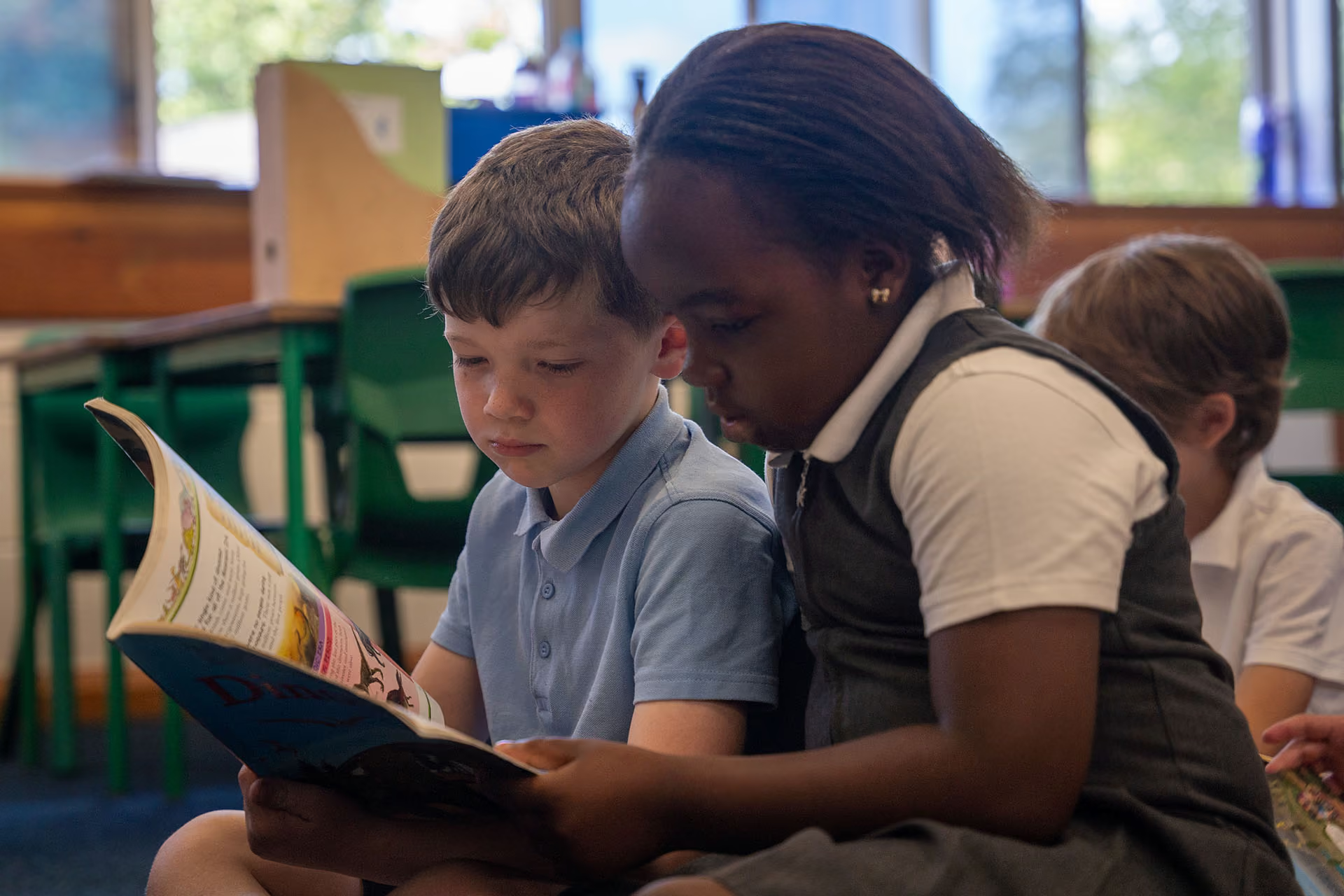
We believe reading is about much more than learning to read accurately. We want children at Staverton to enjoy books, discover new interests, and develop a lifelong love of reading.
Our carefully chosen reading spine introduces children to a wide range of authors, genres, characters, cultures and experiences. We also make time to share books simply for the pleasure of listening to and enjoying a story.
Every child visits our school library each week, where they can choose fiction or non-fiction books to read independently or enjoy with an adult.
Reading at home
Once children have completed Read Write Inc Phonics (see below), they choose books from our Mini Library that are appropriate for their reading ability while still providing a suitable level of challenge.
Working together
Reading develops most successfully when school and home work together. Regular reading at home, sharing stories, talking about books, and visiting libraries all help children become stronger and more enthusiastic readers.
Above all, we want every child at Staverton to know that books are for everyone, and that there is always another wonderful book waiting to be discovered.

What reading looks like
Once children have completed Read Write Inc Phonics, they take part in a daily reading lesson of at least 30 minutes. Children experience a carefully chosen range of high-quality fiction and non-fiction texts, including a core class book each term.
During reading lessons, children often hear their teacher read aloud fluently and expressively while following along with their own copy of the text. This means all children can enjoy and learn from ambitious books, even when they're not yet able to read them independently.
Children learn to:
- Understand and use new vocabulary
- Read with increasing fluency and expression
- Find and explain information in a text
- Make predictions and inferences
- Discuss characters, events and ideas
- Give reasons for their opinions
- Think deeply about what they have read
A key part of reading at Staverton is talking about books. Children are encouraged to share their ideas, listen carefully to others, and use evidence from the text to explain their thinking.

Our reading spine
Our reading spine has been devised to give our KS2 year groups a set of core texts, chosen for their breadth and challenge, that build progression throughout their time at Staverton.
We are constantly reviewing the books, but you can view our current spine below.